- 302-539-1839
- Hours: Mon-Sat 9am-4pm, Sun 10am-4pm
If you garden near the water in Sussex County, where salt spray and soggy ground defeat most plants, marsh-elder is a native shrub worth knowing. This guide covers how marsh-elder handles tough coastal conditions and the wildlife it supports. It was written by Susu Fiske of Inland Bays Garden Center in Frankford, DE, and submitted to the Coastal Point on October 1, 2026. Read the original column here: Marsh-elder is perfect for the area’s soil conditions.
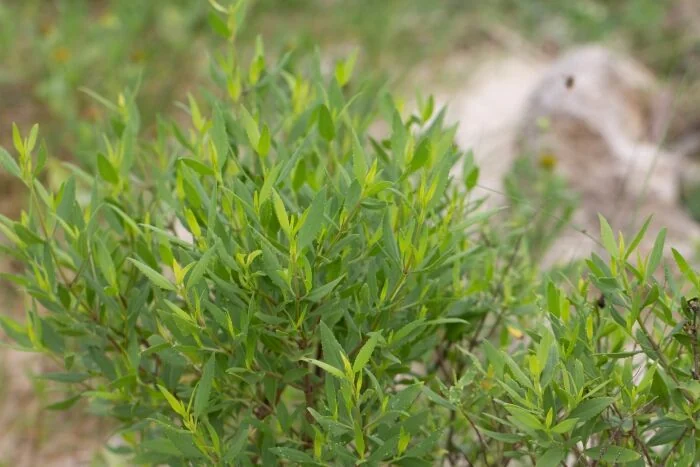
Marsh-elder (iva frutescens), also called high-tide bush, is a flowering shrub in the aster or daisy family (asteraceae). It grows along the coast in eastern North America and is found naturally in brackish marshland. It features egg-shaped gray-green leaves, an open upright habit, and small greenish-white flowers, and it grows from 2 to 10 feet tall.
Here in Delaware we value marsh-elder for its tolerance of conditions that stop most plants. It handles high salinity, poor drainage, and wet soils, tolerates drought, and stands up to salt spray. It is also easy to prune and shape. That combination makes it a strong choice for coastal landscapes, rain gardens, shoreline stabilization, restoration projects, naturalized plantings, and as a specimen shrub. In restoration work, it can colonize dredged material from ditches and ponds built for mosquito control.
Marsh-elder earns its place in the coastal food web. Its small greenish-white flowers bloom from June through September, a long season that feeds bees, butterflies, and beetles. Finches, sparrows, and ground-nesting birds eat the seeds and forage in the dense canopy. It also hosts moth larvae, including the saltmarsh moth and goldenrod hooded owlet. Red-winged blackbirds and marsh wrens use the woody clumps for nesting sites safely above the waterline, and the shrub gives small birds and mammals cover when rising tides flood the marsh floor. Its roots anchor coastal soils and reduce erosion along brackish waterways.
The “high-tide” nickname comes from its habit of growing in a narrow band right along the high-tide line. The upper side of its leaves has tiny rough bumps, or warts, that help tell it apart from similar coastal shrubs. Despite the “elder” name, it is not a true elder. It also picked up the old moniker “Jesuit’s bark” from a historical European association with fever remedies.
Marsh-elder pairs well with other salt-tolerant natives, including groundsel tree (baccharis halimifolia), rose mallow (hibiscus moscheutos), seaside goldenrod (solidago sempervirens), saltmarsh aster (symphyotrichum tenuifolium), salt marsh fleabane (pluchea odorata), seashore mallow (kosteletzkya pentacarpos), southern bayberry (morella cerifera), switchgrass (panicum virgatum), saltmeadow cordgrass (spartina patens), and sea oxeye (borrichia frutescens).
If salt, wind, and wet ground have defeated your past plantings, a coastal native like marsh-elder may be the answer. Stop by Inland Bays Garden Center at 38320 Muddy Neck Road in Frankford, DE, or browse our native plants page. We can help you match the right natives to your site.
Originally written by Susu Fiske, Inland Bays Garden Center, and submitted to the Coastal Point on October 1, 2026.